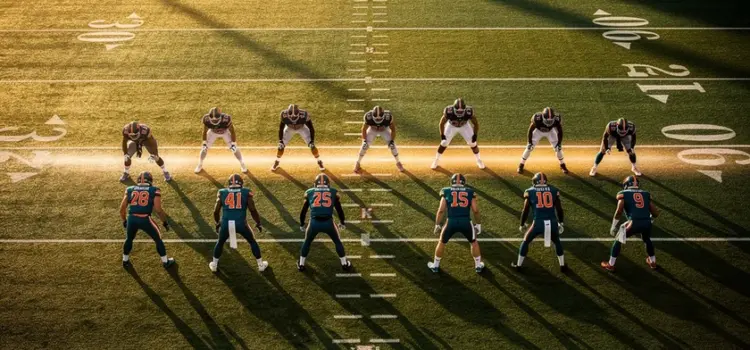
The Baltimore Ravens secured their quarterback depth chart Saturday by re-signing backup Tyler Huntley to a two-year contract, keeping Lamar Jackson’s most trusted backup in the building through at least the 2027 season. Per ESPN’s Adam Schefter, the deal is worth up to $11 million. The agreement prevents Huntley from reaching another team’s roster in free agency, a scenario Baltimore allowed to unfold once before.

For a franchise built around a singular offensive talent in Jackson, the decision to invest in capable backup quarterback play reflects a hard lesson learned. Huntley had previously been released by the Ravens before the team moved to bring him back. This time, Baltimore acted decisively before the open market could complicate the process.

The numbers reveal a pattern in how the Ravens have managed their quarterback room over the past three seasons. Jackson’s injury history — he missed significant time in 2021 — demonstrated precisely how exposed Baltimore becomes when its MVP-caliber starter cannot take snaps. Huntley stepped in during those absences and performed well enough to draw outside interest, making his retention a legitimate front-office priority rather than a routine depth signing.

Why the Ravens Re-Signed Huntley Instead of Letting Him Walk

The Ravens retained Tyler Huntley because no other backup quarterback on the open market offers his familiarity with Baltimore’s scheme. Huntley has operated within offensive coordinator Todd Monken’s system and understands the play-action-heavy structure that makes the Ravens’ offense so difficult to defend. Replacing that institutional knowledge mid-offseason would have cost more in both dollars and preparation time.

Breaking down the advanced metrics, Huntley’s career numbers — 3,212 passing yards, 13 touchdown passes, and 10 interceptions across a 7-9 record as a starter — do not jump off the page. His passer rating and yards-after-catch numbers in spot starts, however, told a more nuanced story. He kept the Ravens competitive in games where the offense needed to adapt without its franchise quarterback. That functional floor matters enormously when the alternative is a cold-weather collapse triggered by an unfamiliar backup struggling with snap counts and protection calls.

An alternative interpretation exists, of course. Some cap analysts would argue that committing up to $11 million across two years to a backup quarterback represents an inefficient allocation of salary cap space, particularly when Baltimore faces contract decisions at other positions. Based on available data, though, the Ravens have consistently prioritized quarterback continuity above marginal savings at the backup spot — and the results, measured by their sustained playoff presence, support that philosophy.

What Does the Huntley Contract Mean for Lamar Jackson’s Supporting Cast?

Read more: NFL Free Agency 2026: Legal Tampering

The Huntley re-signing directly affects how Baltimore structures the rest of its offseason roster construction around Lamar Jackson. With the backup quarterback position settled, the Ravens’ front office can redirect attention toward wide receiver depth, offensive line continuity, and defensive secondary upgrades — all areas that factor into whether Jackson can push the Ravens back to the AFC Championship level in 2026.

Salary cap implications deserve scrutiny here. The Ravens carry one of the largest quarterback cap hits in the NFL between Jackson’s record-setting extension and now Huntley’s new deal. General manager Eric DeCosta must thread the needle between retaining proven contributors and creating flexibility for in-season acquisitions. A two-year structure on Huntley’s contract gives Baltimore an exit ramp after Year 1 if the cap picture tightens, which represents sound contract architecture for a non-starter role.

The film shows that when Huntley operates within a structured, run-first offensive framework — the kind Jackson’s presence enables Baltimore to build — his limitations as a pure passer become less exposed. He does not need to carry the offense vertically. He needs to manage the game, execute play-action, and protect the ball. His 10 career interceptions against 13 touchdowns suggest he does that adequately, if not spectacularly.

Key Developments in the Ravens’ Quarterback Depth Chart

  • The Ravens agreed to a two-year contract with Huntley worth up to $11 million, per ESPN’s Adam Schefter.
  • Huntley carries a career record of 7-9 as a starter, with 3,212 passing yards in his NFL tenure.
  • Baltimore had previously released Huntley before moving to re-sign him, indicating the team reassessed his value during the free agency evaluation period.
  • Huntley has thrown 13 touchdown passes against 10 interceptions across his career starts, reflecting a functional but conservative backup profile.
  • The deal structure uses incentives and escalators to reach its maximum value — a standard NFL contract device that means the base guarantee sits below the $11 million ceiling.

How Does This Decision Shape Baltimore’s 2026 Offseason Strategy?

Read more: CeeDee Lamb and Cowboys Face Pivotal

Baltimore’s 2026 offseason strategy now has a clear foundation: Lamar Jackson leads the offense, Huntley provides credible insurance, and DeCosta can pursue upgrades elsewhere without the distraction of an unsettled quarterback room. Draft strategy analysis for the Ravens’ upcoming picks will likely focus on skill positions and defensive personnel rather than quarterback development, given the depth now in place.

The Ravens also traded for pass rusher Maxx Crosby, per references in the source material, which signals that Baltimore is operating in win-now mode rather than rebuilding. Pairing an elite edge rusher with a two-time NFL MVP at quarterback creates the kind of two-sided roster construction that contending teams require. Huntley’s retention fits that model: it removes a vulnerability without consuming the cap space needed for premium talent acquisition.

Tracking this trend over three seasons, the Ravens have consistently demonstrated that they treat quarterback depth as a non-negotiable investment. Jackson’s durability has improved, but the NFL’s injury environment makes backup quarterback quality a legitimate competitive variable. Baltimore’s willingness to pay market rate for Huntley — rather than gambling on a cheaper, less proven option — reflects the front office’s understanding that one snap can alter a season’s trajectory. The defensive scheme breakdown and offensive line depth chart will draw more attention as the offseason progresses, but the quarterback room is now closed for business.

Kirk Cousins and the Atlanta Falcons are staring down one of the most consequential offseasons in franchise history, with 2026 NFL free agency now fully underway. The Falcons carry heavy salary cap obligations tied to their veteran quarterback. Decisions on both sides of the ball are piling up fast.

The broader free agent market offers Atlanta both opportunity and a cautionary tale. Bleacher Report’s 2026 NFL Free Agency Big Board ranks over 100 available players, and several defenders with direct ties to the Falcons appear on that list. Chief among them is linebacker Kaden Elliss, a name familiar to every Atlanta fan who watched the defense grind through last season.

Where Does Kirk Cousins Fit in Atlanta’s 2026 Plans?

Kirk Cousins remains the centerpiece of Atlanta’s offensive identity, but the numbers around him demand scrutiny. The Falcons’ front office brass must weigh his cap hit against a defense that shed key contributors heading into free agency.

Cousins posted solid numbers as a pocket passer in play-action heavy sets last season. Head coach Raheem Morris leaned on that scheme to compensate for an offensive line that struggled in pass protection at times. The approach works. But it limits the ceiling when opponents sell out against the run.

One counterargument worth noting: Cousins’ age and contract structure make a clean roster reset difficult. Dead money from any restructure could handcuff Atlanta’s cap well into 2027. Every dollar spent on free agents this spring is a calculated bet with long-term echoes.

Kaden Elliss and Atlanta’s Defensive Free Agency Crunch

Read more: Chicago Bears Expected to Let Jaquan

Atlanta’s defensive free agency situation is genuinely urgent. Kaden Elliss — a 30-year-old linebacker who topped 100 tackles in three straight seasons and recorded 8.5 sacks over the past two years — is listed as an available free agent on Bleacher Report’s Big Board. Losing him without a quality replacement would gut the middle of Atlanta’s defense at a bad time.

Elliss also posted six passes defended in 2025, which matters in a division where quarterbacks demand linebackers who can drop into coverage. His workhorse usage rate made him the anchor of multiple blitz packages under Atlanta’s defensive coordinator. Replacing that production off the street is not realistic.

Kaden Elliss is the kind of off-ball linebacker who processes quickly at the second level — he rarely takes false steps against misdirection, which is exactly what NFC South offenses throw at defenses week after week. Re-signing him at a fair annual value should be Atlanta’s top defensive priority before the market inflates his price. The Falcons have seen what happens when they let core defenders walk and then scramble for patchwork replacements; the 2024 season offered a painful lesson in that regard. A linebacker who can play downhill on early downs and hold his own in zone coverage does not come cheap, and Elliss has earned every dollar of whatever deal he lands.

What the Broader Free Agent Market Means for Atlanta

Atlanta’s roster decisions don’t happen in a vacuum. The 2026 free agent pool runs unusually deep at linebacker and edge rusher, giving the Falcons real options if Elliss prices himself out.

Bleacher Report’s Big Board highlights Jalyx Hunt, a 27-year-old edge rusher who notched 7.5 sacks and 19 quarterback pressures in just 12 games with the Los Angeles Rams last season. That pressure rate per snap was among the best of any available edge rusher. Hunt offers the kind of high-upside addition that upgrades a pass rush without burning a first-round pick.

Devin Lloyd is another name worth circling. The linebacker recorded 81 tackles, 1.5 sacks, seven passes defended, 14 quarterback pressures, and five interceptions across 15 games in 2025 — holding opposing passers to a 56.4 rating in coverage. Five picks from a linebacker would have led the entire Falcons defense last year. His coverage numbers are elite for the position and directly address a weakness Atlanta showed in zone-heavy packages.

Atlanta Falcons general manager Terry Fontenot will also weigh draft strategy against free agent spending. If the front office targets the 2026 defensive class heavily, they may let mid-tier linebackers go and focus cap space on one elite fit. That math shifts entirely if Kirk Cousins’ contract gets restructured before the legal tampering window closes.

Key Developments in Atlanta’s Offseason

Read more: Detroit Lions Release LT Taylor Decker

  • Kaden Elliss posted six passes defended in 2025 alongside his tackle and sack production, ranking him among the most complete off-ball linebackers in this free agent class.
  • Devin Lloyd allowed just a 56.4 opposing passer rating in coverage across 15 games last season, a figure that ranks among the best at linebacker league-wide.
  • Jalyx Hunt’s 19 quarterback pressures in 12 Rams games suggests his pressure rate per snap was among the highest of any edge rusher now available.
  • Green Bay declined Quay Walker’s fifth-year option; the 25-year-old hit at least 100 tackles, two passes defended, and 1.5 sacks in all four pro seasons — a volume-consistent floor at likely a discounted price.
  • Bleacher Report’s Big Board covers more than 100 players in 2026 free agency, reflecting a historically wide defensive market that gives teams more flexibility than in recent cycles.

What Happens Next for the Falcons and Their Quarterback?

Terry Fontenot faces a genuine fork in the road. Commit fully to Kirk Cousins, restructure his deal to free cap room, and chase defenders like Elliss or Lloyd. Or quietly pivot toward a draft strategy aimed at finding a successor in 2026 or 2027. Neither path is clean.

The NFC South is not standing still. Tampa Bay and New Orleans are both active in free agency. Carolina’s rebuild under Dave Canales is adding pieces faster than most predicted. Atlanta’s window with Cousins under center is not infinite — his game now leans heavily on short-area throws, play-action, and a strong ground game. All three of those things need investment right now.

Based on the Bleacher Report Big Board, the defensive free agent market gives Atlanta a real path to upgrading the roster without mortgaging future picks. Whether Fontenot pulls the trigger on a linebacker or edge rusher in the coming days will signal exactly how committed this organization is to winning in 2026.

What is Kirk Cousins’ current contract situation with the Atlanta Falcons?

Kirk Cousins signed a four-year, $180 million deal with Atlanta in 2024, making him one of the priciest quarterbacks in the league at signing. Dead money provisions make an outright release financially brutal, so the Falcons are far more likely to pursue a restructure than a cut. Any restructure would spread the cap hit across future years, which is why Atlanta’s 2027 books are already a concern inside the building.

Is Kaden Elliss leaving the Atlanta Falcons in 2026 free agency?

Elliss is listed as an available free agent on Bleacher Report’s 2026 NFL Free Agency Big Board, meaning he enters the open market without a contract. At 30, he still has leverage — three straight 100-tackle seasons and 8.5 sacks over two years give him strong footing to draw multi-year offers from several teams, not just Atlanta.

Who is Devin Lloyd and why do the Falcons want him?

Lloyd played 15 games in 2025 and delivered five interceptions while holding opposing quarterbacks to a 56.4 passer rating in coverage. Beyond the ball-hawking, he added 14 quarterback pressures — rare production for an off-ball linebacker. Atlanta’s zone packages exposed a coverage liability at the position last season, and Lloyd’s skill set targets that gap precisely.

What edge rushers are available in 2026 NFL free agency that Atlanta could target?

Jalyx Hunt leads the conversation after 7.5 sacks and 19 pressures in 12 Rams games. At 27, he offers several productive years ahead. Jihad Oweh is a secondary option — the former Baltimore Ravens first-round pick from 2021 posted 7.5 sacks with the Rams and brings elite burst off the edge to any rotation.

How does the Quay Walker situation affect Atlanta’s linebacker search?

Green Bay declining Walker’s fifth-year option dropped a 25-year-old with four consecutive 100-tackle seasons onto the market. His floor is consistent even if his ceiling is lower than Elliss or Lloyd. For Atlanta, Walker could function as a cost-controlled depth piece if the top targets sign elsewhere, giving the defense a reliable volume tackler without a premium price tag.

The Denver Broncos have interest in free-agent wide receiver Romeo Doubs, a former Green Bay Packers pass-catcher, according to Luca Evans of The Denver Post. The report arrived just days before the NFL free-agent signing period opens, drawing a muted reaction from fans who had expected a higher-profile addition at the position.

Doubs spent his early career in Green Bay. He grew into a capable receiver there but never broke into the top tier of the position. For a fan base that has watched the club struggle to build a consistent receiving corps, the reported interest points to a cost-conscious approach rather than a splashy commitment at wideout.

Why Are the Broncos Looking at Romeo Doubs?

Denver’s interest in Doubs fits the profile of a team seeking young, affordable depth at receiver. The club appears unwilling to pay a premium for a proven No. 1 option. Doubs is described as a capable young NFL receiver who offers upside at a likely modest price, which aligns with how the front office appears to be managing its offseason budget.

Doubs ran routes in Green Bay’s West Coast-influenced system. That background transfers reasonably well to most modern NFL offenses. His target share and yards-after-catch output never lifted him to WR1 status during his time with the Packers. That gap between his actual production and what Broncos Country hopes to land is exactly what makes this report land flat for many supporters.

One counterpoint worth considering: adding a younger receiver on a team-friendly deal does not stop Denver from pursuing a higher-cost option at the same time. The Denver Post frames Doubs as a strong potential fit rather than a done deal, leaving room for the front office to add further moves at the position.

What Does This Mean for Denver’s Receiver Depth Chart?

Read more: Chicago Bears Expected to Let Jaquan

Denver enters free agency with real questions about target distribution and snap-count reliability at the top of the receiver room. Adding Doubs would address depth and provide a young option with upside, but the club’s salary cap approach will ultimately shape whether they can pair him with a more established pass-catcher.

Doubs wins on short-to-intermediate routes and has the athleticism to contribute from the slot. His Green Bay experience in a pass-heavy system gave him exposure to complex route trees, which matters when a coordinator is building out a full personnel grouping. His production profile, though, does not signal red-zone efficiency or the contested-catch ability that lifts a receiver to true No. 1 status on an NFL roster.

For fantasy-focused fans tracking Denver’s offense, Doubs’ weekly target share would depend heavily on how the team structures its receiver rotation. A crowded room limits his floor. A thinner group could push his snap count — and therefore his value — considerably higher. The Sporting News characterized Doubs as “a capable young NFL receiver” but noted he is “far from the top-tier wide receiver many fans within Broncos Country are expecting.”

Key Developments in Denver’s Free-Agent Receiver Search

The points below capture what sourced reporting has confirmed about the Broncos and Doubs heading into the 2026 free-agent period. Three data points from available reporting frame the scope of Denver’s receiver pursuit this offseason.

  • The Broncos have confirmed interest in Romeo Doubs, per an NFL source cited by Luca Evans of The Denver Post.
  • Doubs is described by The Denver Post as a strong potential fit for the club — not a completed signing.
  • Doubs played for the Green Bay Packers before entering free agency this offseason.
  • The Sporting News noted Doubs is “far from the top-tier wide receiver many fans within Broncos Country are expecting.”
  • Separately, the Broncos are also reportedly likely to receive positive news regarding a pending free agent’s predicted departure, per additional reporting flagged by The Sporting News.

What Happens Next for Denver’s Offseason Receiver Strategy?

Read more: Detroit Lions Release LT Taylor Decker

Denver’s front office faces a clear decision in the coming days. The choice: commit to Doubs as a depth piece while continuing to chase a true No. 1 receiver, or treat him as the primary addition and redirect cap space elsewhere. The club’s salary cap position and draft strategy will shape which path it takes once the signing period opens.

The broader offseason picture includes questions beyond the receiver position. Defensive scheme additions, offensive line depth, and how the front office allocates remaining cap space all factor into the final roster shape. Wide receiver, though, draws the most scrutiny from Broncos Country, and the Doubs report does little to quiet that noise.

Recent offseason cycles reveal a pattern in Denver: the team has consistently added mid-tier options without landing the alpha receiver that lifts a passing offense’s ceiling. Whether this offseason breaks that pattern depends on moves still ahead. Based on available data from The Denver Post, Doubs represents one piece of what could be a larger puzzle — not a standalone answer.

Frequently Asked Questions

Why are the Denver Broncos interested in Romeo Doubs?

According to Luca Evans of The Denver Post, the club views Doubs as a young, affordable receiver who offers upside without requiring a large contract commitment. The interest aligns with a cost-conscious approach to building receiver depth this offseason.

Where did Romeo Doubs play before becoming a free agent?

Doubs played for the Green Bay Packers before entering free agency ahead of the 2026 NFL signing period. He developed in Green Bay’s pass-heavy, West Coast-influenced offensive system during his early NFL career.

Is Denver’s interest in Doubs a completed signing?

No. The Denver Post’s reporting frames the interest as a strong potential fit rather than a completed agreement. The Broncos have not announced any deal with Doubs as of the date of this report.

How do analysts view Doubs as a fit for Denver?

The Sporting News described Doubs as “a capable young NFL receiver” but noted he is “far from the top-tier wide receiver many fans within Broncos Country are expecting.” That view reflects the gap between his production profile and what many Denver supporters had hoped the team would target this offseason.

The Kansas City Chiefs are pursuing running back help this offseason, and Chris Jones and his defensive teammates may soon have a new offensive weapon alongside them. NFL Network reporter Jeremy Fowler reported Sunday that Travis Etienne has drawn interest from both the Denver Broncos and the Chiefs, putting Kansas City in a two-team AFC West race for the former Jacksonville Jaguar.

The timing matters. Patrick Mahomes has operated without a true RB1 for stretches of recent seasons, and the Chiefs’ front office brass appears determined to fix that heading into 2026. Fowler’s report places the market ceiling for top running backs this cycle at $12 million per year — a number that would put Etienne and fellow free agent Zach Walker at the top of the market.

Why the Chiefs Need a New RB1 Around Chris Jones

Kansas City’s backfield situation has been a recurring concern for the coaching staff. The numbers reveal a pattern: the Chiefs have lacked a workhorse back capable of carrying the load in close games, which forces Mahomes to shoulder an even heavier burden in the passing game. Adding Etienne would give Kansas City a genuine dual-threat option who can stress defenses in the flat and on early downs, reducing the blitz rate opponents feel comfortable deploying against a Mahomes-led offense.

Travis Etienne spent his first four NFL seasons in Jacksonville, developing into one of the AFC’s more versatile backs. His yards after catch in the passing game and his ability to function in a spread-spacing scheme make him a natural fit for offensive coordinator Matt Nagy’s system. The Chiefs already run a significant share of play-action concepts, and a back with Etienne’s receiving profile would expand that menu considerably. For a team built around red zone efficiency and time of possession, that versatility carries real value.

Fowler’s Report: What the $12 Million Ceiling Means

Read more: Chicago Bears Expected to Let Jaquan

Jeremy Fowler’s assessment sets a clear salary cap benchmark for this running back class. At roughly $12 million annually, both Etienne and Zach Walker would represent significant investments — meaningful cap hits for franchises that must balance star-level contracts across the roster. For Kansas City, any running back deal at that price point would require careful cap-structure work, particularly given the long-term commitments already attached to Chris Jones on defense and Mahomes on offense.

Breaking down the advanced metrics, Etienne’s production in Jacksonville showed genuine efficiency on a per-carry basis even when the Jaguars’ offensive line struggled. That kind of independent production — value that travels with the player rather than depending on scheme — is exactly what general manager Brett Veach typically targets when he pulls the trigger on a deal. The Chiefs have historically preferred backs who can contribute in three phases: early-down running, third-down receiving, and pass protection.

Denver’s presence in the Etienne sweepstakes adds a layer of urgency. The Broncos, now operating under a rebuilt front office and with Bo Nix at quarterback, are competing directly in the AFC West — the same division where Chris Jones anchors Kansas City’s defense. Losing Etienne to a divisional rival would sting twice: Denver would gain a weapon, and the Chiefs would be left searching for alternatives. That competitive calculus often accelerates offseason decisions.

Chris Jones and the Bigger Chiefs Offseason Picture

Chris Jones remains the defensive cornerstone of Kansas City’s roster construction, and the decisions made this offseason around him will shape the team’s competitive window. Adding a legitimate running back does more than help Mahomes — it shortens drives, controls the clock, and keeps Jones and the defense fresher in the fourth quarter. The connection between offensive personnel and defensive workload is direct: a ground game that sustains drives reduces the number of snaps an aging defensive front must absorb.

Kansas City’s salary cap implications this offseason are substantial. The Chiefs must manage dead money considerations while remaining active in free agency and the draft. Based on available data, the team has shown a preference for blending free agency signings with mid-round draft investments at the running back position rather than spending top picks on the spot. That draft strategy analysis suggests Etienne — a proven veteran — fits the profile better than a rookie would, assuming the price lands within a workable cap structure.

One counterargument worth considering: at $12 million per year, Etienne’s contract would represent a significant departure from how Kansas City has traditionally valued the running back position. The Chiefs have long operated on the philosophy that backs are fungible and that Mahomes’s ability to manufacture offense makes elite running back play less necessary than it is elsewhere. That philosophy has three Super Bowl rings behind it. Whether Veach ultimately commits to a top-dollar back or pivots to a cheaper depth chart solution via the draft remains an open question — but Fowler’s report confirms the Chiefs are at minimum engaged at the highest level of the market.

Key Developments in the Chiefs’ Running Back Search

Read more: Detroit Lions Release LT Taylor Decker

  • Jeremy Fowler specifically named both Denver and Kansas City as teams with “AFC West love” for Etienne, framing this as a divisional competition for the back’s services.
  • The reported market ceiling of $12 million per year for top running backs would make any deal for Etienne one of the richest RB contracts in the NFL this cycle.
  • Zach Walker has been mentioned alongside Etienne as a comparable free agent target, suggesting the Chiefs have identified multiple candidates rather than committing exclusively to one player.
  • The Sporting News reported this development on March 8, 2026, placing it among the earliest significant offensive free agency links for Kansas City this offseason.
  • Fowler’s sourcing indicates Etienne’s market is being shaped by AFC West demand specifically, which could drive his price above what NFC or AFC East teams are willing to offer.

What teams are interested in Travis Etienne in 2026 free agency?

According to Jeremy Fowler of NFL Network, both the Kansas City Chiefs and the Denver Broncos have shown interest in Travis Etienne, with Fowler describing it as “AFC West love” for the running back. The two teams are divisional rivals, which adds competitive urgency to the pursuit.

How much will Travis Etienne cost in free agency?

Fowler’s reporting places the market ceiling for top running backs this offseason at approximately $12 million per year, a figure that would apply to both Etienne and comparable free agent Zach Walker. That price point would rank among the highest annual values ever paid to a running back in NFL history, based on historical contract data.

Does Chris Jones have a new contract with the Chiefs for 2026?

Chris Jones is under contract with Kansas City as the team’s franchise defensive tackle and remains the anchor of the Chiefs’ defensive scheme. The current offseason focus for the organization involves offensive additions — specifically at running back — rather than any reported changes to Jones’s existing deal.

Why do the Chiefs need a running back this offseason?

Kansas City has lacked a consistent RB1 capable of carrying an early-down workload alongside Patrick Mahomes. The Chiefs have been linked to multiple backs in free agency, reflecting a front-office consensus that upgrading the position is a priority. A reliable ground game also eases the snap-count burden on the defensive unit that Chris Jones leads.

Who wrote the Travis Etienne-Chiefs report?

Jeremy Fowler, a reporter covering the NFL, authored the specific line connecting Etienne to Kansas City and Denver. The Sporting News published the report on March 8, 2026. Fowler noted that the running back market ceiling this offseason could reach $12 million, framing Etienne as one of the top available backs.

Sauce Gardner holds the richest cornerback contract in NFL history, with his $30.1 million average annual salary now serving as the official benchmark for the league’s top defensive backs. That number, tied to Gardner’s deal with the Indianapolis Colts, became the center of the NFL’s cornerback market conversation Sunday when NBC Sports reported the Los Angeles Rams are pushing hard to sign Trent McDuffie to a long-term extension that would eclipse it. The market is moving fast, and Gardner’s contract is the number every agent and front office is staring at right now.

The former New York Jets cornerback — widely regarded as one of the best cover men in football — set that $30.1 million per year standard after leaving New York and landing in Indianapolis. Now, barely settled into his Colts tenure, Gardner’s deal is already under pressure from a rising challenger on the West Coast.

How Sauce Gardner Became the Cornerback Pay Standard

Sauce Gardner’s $30.1 million average annual salary is the highest ever paid to a cornerback in NFL history, based on available data from the current market. Gardner earned that contract through three dominant seasons that included a unanimous All-Pro nod as a rookie, a Pro Bowl selection, and a reputation as the most difficult cover corner in the AFC. Breaking down the advanced metrics from his peak Jets years, Gardner consistently ranked among the top cornerbacks in coverage grade, allowing minimal yards after catch and posting elite passer rating-against numbers in man coverage.

Gardner’s journey from Cincinnati to the Jets’ first-round pick in 2022 to the highest-paid corner in football tracks a rapid ascent that few defensive backs have matched in the salary cap era. The Jets drafted him fourth overall and watched him anchor their secondary for three-plus seasons before the front office brass ultimately moved him to Indianapolis. His cap hit structure under the new deal reflects the league’s growing recognition that shutdown corners — true island defenders who can eliminate a receiver without safety help — command elite quarterback money in today’s pass-heavy NFL.

The numbers suggest Gardner’s value is structural, not just statistical. NFL teams now build defensive schemes around corners capable of locking down one half of the field, freeing up safeties to play centerfield or blitz. A corner who can do that at Gardner’s level — consistently, over a full 17-game schedule — is worth every dollar of a $30.1 million annual commitment.

Trent McDuffie and the Rams: Who Could Top the Record?

Read more: NFL Free Agency 2026: Legal Tampering

Trent McDuffie and the Los Angeles Rams have made “significant progress” toward a long-term extension that would make McDuffie the highest-paid cornerback in the NFL, surpassing Gardner’s current record mark. McDuffie is currently playing out the fifth year of his rookie deal, carrying a $13.632 million salary for the 2026 season — a figure that dramatically undersells his market value. The gap between what he’s earning now and what he’s about to earn is one of the starkest in the league.

McDuffie, a first-round pick out of Washington in 2022 — the same draft class as Gardner — developed into a cornerstone of Kansas City’s championship defense before landing in Los Angeles. The Rams, aggressive in their approach to locking up key pieces, appear ready to pull the trigger on a deal that would reset the cornerback pay chart entirely. NFL Media reported the progress Sunday, March 8, 2026.

One counterargument worth considering: McDuffie has dealt with injury concerns that Gardner largely avoided during his peak Jets years. The numbers suggest McDuffie’s talent is undeniable, but durability questions could factor into the final contract structure — whether that means a slightly lower average annual value or heavier incentive clauses built into the back end of the deal.

Key Developments in the Cornerback Market Shake-Up

  • NFL Media reported Sunday that McDuffie and the Rams have made “significant progress” toward a long-term extension — the specific word “significant” signals this is past exploratory talks.
  • McDuffie’s current fifth-year option salary of $13.632 million for 2026 represents less than half of what Gardner earns annually, illustrating the enormous jump he is about to receive.
  • Gardner’s $30.1 million per year figure is tied to his contract with the Colts, not the Jets — confirming his departure from New York is already reflected in the official pay chart.
  • The Rams’ pursuit of McDuffie represents a major salary cap commitment for a Los Angeles roster already managing significant veteran contracts across multiple positions.
  • Both Gardner and McDuffie entered the league in the 2022 NFL Draft, meaning the same draft class now holds the top two spots on the cornerback pay chart — a remarkable concentration of elite corner talent from a single year.

What Does This Mean for NFL Salary Cap Strategy?

Read more: CeeDee Lamb and Cowboys Face Pivotal

The cornerback market reset has direct salary cap implications for every team carrying a top-tier corner on a pre-extension deal. Once McDuffie signs above $30.1 million annually, every pending cornerback negotiation in the league recalibrates to that new ceiling. Teams with corners entering contract years — particularly those in the 25-27 age range with All-Pro production — will cite both Gardner and McDuffie as comparable contracts in negotiations. The ripple effect through the defensive back market will be felt across the next two or three offseasons.

The Indianapolis Colts, meanwhile, carry Gardner’s deal as a long-term cornerstone of their defensive rebuild. From a scheme standpoint, Gardner’s ability to play press-man coverage without safety help gives Indianapolis coordinators the flexibility to deploy an extra linebacker or safety in the box — a formation advantage that justifies the cap expenditure in a division that features Patrick Mahomes, Justin Herbert, and Derek Carr at quarterback. The Colts’ defensive scheme breakdown around Gardner’s skill set will be one of the more interesting draft strategy analysis questions heading into the 2026 offseason, as they look to build complementary pieces around their franchise corner.

The broader market reality is straightforward: cornerback is no longer a position NFL front offices can address on the cheap at the top end. Gardner’s deal proved the market would pay $30 million-plus for the right player. McDuffie’s pending extension confirms that number was a floor, not a ceiling. Any team hoping to sign a proven, young shutdown corner in free agency or lock one up on an extension should budget accordingly — the defensive back market analysis for 2026 and 2027 starts with these two contracts as the baseline.

What is Sauce Gardner’s current contract and annual salary?

Sauce Gardner’s contract carries an average annual salary of $30.1 million per year, making him the highest-paid cornerback in NFL history based on current market data. Gardner signed that deal with the Indianapolis Colts after departing the New York Jets, where he was drafted fourth overall in 2022 and spent his first several NFL seasons.

Which team is Sauce Gardner playing for in 2026?

Sauce Gardner is playing for the Indianapolis Colts in 2026. Gardner previously played for the New York Jets, who selected him with the fourth overall pick in the 2022 NFL Draft. His move to Indianapolis came after his Jets tenure, and his Colts contract now anchors the top of the NFL cornerback pay chart.

How much is Trent McDuffie making compared to Sauce Gardner?

Trent McDuffie is currently earning $13.632 million for the 2026 season on the fifth year of his rookie deal — less than half of Gardner’s $30.1 million annual average. McDuffie and the Rams are negotiating a long-term extension that would exceed Gardner’s record figure, according to NFL Media reporting from March 8, 2026.

What draft class did Sauce Gardner and Trent McDuffie come from?

Both Sauce Gardner and Trent McDuffie entered the NFL through the 2022 NFL Draft. Gardner went fourth overall to the Jets, while McDuffie was selected in the first round by Kansas City. Their shared draft class now holds the two highest cornerback contracts in league history, an unusual concentration of elite talent from a single year.

How does the Rams-McDuffie extension affect other NFL cornerback contracts?

A McDuffie extension above $30.1 million annually would reset the entire cornerback market, giving agents for other top corners a new ceiling to cite in negotiations. Every corner aged 25-27 with All-Pro production will use both Gardner’s deal and McDuffie’s pending extension as comparable contracts, pushing average annual values upward across the defensive back market through 2027 and beyond.

Atlanta Falcons tight end Kyle Pitts traveled to New Albany, Indiana on March 6 to attend the celebration of life for former NFL wide receiver Rondale Moore, then posted on social media to criticize the few NFL players who showed up. Pitts did not name specific players, but his message was pointed and public. The Atlanta Falcons were represented by a player willing to fly to Indiana while much of the league stayed home.

Moore, who died after losing two seasons to injury, was a second-round pick in the 2021 NFL Draft out of Purdue. He spent three pro seasons with the Arizona Cardinals before his career ended. The numbers reveal a hard truth: a player who gave three years to professional football drew only a small group of former peers to his memorial service.

Who Was Rondale Moore?

Rondale Moore was a wide receiver the Arizona Cardinals selected in the second round of the 2021 NFL Draft after a standout college career at Purdue. He played three seasons in Arizona. Injuries then forced him out of the league, costing him two full seasons before his death.

Players who flash early ability but lose multiple seasons to injury rarely stay in the public eye. The Cardinals drafted Moore with a high-upside profile. He showed elite short-area quickness out of Purdue. Arizona deployed him as a gadget weapon early in his career. But the injuries arrived before Moore could build a consistent target share or the kind of production that keeps a player relevant after he leaves the game.

Two full seasons lost to rehab is a brutal stretch. Pitts referenced that timeline directly in his post. For players grinding through extended recovery, the isolation from teammates and the league can hit hard. Pitts argued that the broader NFL community does not fully grasp that weight. The Atlanta Falcons tight end put that argument in front of a national audience.

What Kyle Pitts Said After the Service

Read more: Joe Mixon Released After NFL Injuries

Pitts posted publicly after the event in Indiana, upset that only a handful of former NFL players attended. He framed his criticism around the rehab experience, not just attendance numbers. Film of his career shows how much time Moore spent away from the field, and Pitts leaned on that reality to make his case.

“And I was just thinking that what people don’t realize is how hard the rehab process is on professional athletes, especially when you have major injuries,” Pitts wrote. That line does more than call out low turnout. Pitts drew a direct connection between Moore’s injuries, his time away from the league, and the apparent absence of former teammates at the service.

Pitts did not name any individual player. A broad statement like that carries different weight than a targeted accusation. His post pushed toward a conversation about how the NFL treats players who exit because of health problems, not performance failures.

No other current NFL player had publicly commented on the turnout as of publication. One fair counterpoint: some players who wanted to attend may have had prior commitments during the early March window, which falls during the NFL’s legal tampering and free agency preparation period. Pitts may not have had full visibility into every schedule. But his own eyewitness account at the venue gave him a clear view of who showed up.

Atlanta Falcons Tight End Steps Into a Bigger Conversation

Pitts attending the service puts the Atlanta Falcons at the center of a discussion that goes beyond roster moves or cap space. He made a personal trip to Indiana during a stretch when most NFL players focus on free agency and contract talks. That choice alone set him apart from the crowd.

Moore’s situation fits a documented pattern in professional sports: players who exit via injury get far less public attention than those who retire after long careers or leave on their own terms. Three NFL seasons played, two full years lost to injury, and a memorial that drew only a small cluster of former peers. That gap between what Moore went through and how many showed up to honor him drove Pitts to post publicly.

The Atlanta Falcons have not issued a statement on the matter. Pitts acted on his own. His willingness to speak during a sensitive moment signals conviction beyond a standard tribute post.

For a franchise that drafted Pitts fourth overall in 2021, that kind of off-field leadership adds a dimension to his profile that extends past snap counts and target shares. His post put a spotlight on how the league handles players who wash out because of physical setbacks, not a lack of effort or talent.

For anyone tracking Pitts heading into the 2026 season, his offseason activity carries no direct fantasy football implications. Atlanta’s offensive scheme will still drive his production numbers. But this week, the conversation around the Atlanta Falcons runs through a tight end who flew to Indiana to honor a player many others apparently did not prioritize.

Key Facts From the Memorial Service

Read more: Houston Texans Release Joe Mixon After

  • Kyle Pitts attended the celebration of life in New Albany, Indiana on March 6.
  • Pitts posted on social media criticizing the low turnout of NFL players at the event.
  • Moore lost two seasons to injury before his death, a fact Pitts cited as context for why the turnout mattered.
  • Moore was a second-round pick in the 2021 NFL Draft and spent three NFL seasons with the Arizona Cardinals after playing college ball at Purdue.
  • Pitts called out the difficulty of the professional athlete rehab process as something Moore’s peers failed to fully honor with their presence.

Why did Kyle Pitts criticize NFL players after the Rondale Moore memorial?

Kyle Pitts attended the celebration of life in New Albany, Indiana on March 6 and was upset that only a handful of NFL players showed up. Pitts posted on social media that people underestimate how hard the rehab process is for professional athletes dealing with major injuries, which was the situation Moore faced before his death.

Who was Rondale Moore and what team did he play for?

Rondale Moore was an NFL wide receiver drafted by the Arizona Cardinals in the second round of the 2021 NFL Draft out of Purdue. Moore spent three NFL seasons with Arizona before injuries ended his career. He lost two full seasons to those injuries before his death.

What is Kyle Pitts’ connection to Rondale Moore?

Kyle Pitts, the Atlanta Falcons tight end, is described in reporting as a former teammate of Rondale Moore. Pitts traveled to New Albany, Indiana to attend the memorial on March 6 and publicly criticized the low attendance of other NFL players at the event.

What did Kyle Pitts say about the rehab process for NFL players?

Pitts wrote that people do not realize how hard the rehab process is on professional athletes, especially those dealing with major injuries. He made this point in the context of Moore losing two seasons to injury and the low turnout of former peers at his memorial.

The Dallas Cowboys enter the 2026 NFL free agency period carrying the draft-capital fallout of last year’s Micah Parsons trade, a deal that cost the franchise one of its premier pass rushers while leaving the roster picture decidedly complicated. As the NFL’s negotiating window opened at noon ET on March 9, Dallas found itself among seven teams that USA Today named as financially constrained heading into both free agency and the spring draft.

The Cowboys hold two first-round picks in the 2026 draft — a real asset — but the depth of their remaining capital tells a more cautious story. One of those first-rounders came directly as compensation from the Micah Parsons deal. Below that level, the cupboard is thin.

How the Micah Parsons Trade Reshaped Dallas’s Draft Board

The Parsons move did not stand alone as the sole transaction draining Dallas’s mid-round resources. Two later deals compounded the damage. The Cowboys lost a second-round pick and a third-rounder — the range where teams most reliably find starting-caliber players at below-market cost.

Dallas sent its 2026 second-round pick to the New York Jets as part of the trade for defensive tackle Quinnen Williams. That deal filled an interior defensive line need but extracted meaningful draft currency. Then the Cowboys gave up their third-round selection to the Pittsburgh Steelers in exchange for wide receiver George Pickens.

The Pickens move addressed a real offensive gap — Dallas had searched for a legitimate No. 1 receiver for multiple seasons. But the combined effect of all three trades left the franchise with the first-rounder from Micah Parsons compensation, their own first-round pick, and then nothing until mid-Round 4. That is a steep structural price for any front office to absorb in a single offseason cycle.

Mid-round picks — particularly second- and third-rounders — historically generate a disproportionate share of starters relative to their cost. Losing three straight picks in that range amounts to a concentrated bet on the players acquired in return, a wager Dallas’s front office clearly judged worth making.

Dallas Cap Picture: Constrained Entering the New League Year

Read more: Jared Goff and the Lions Face

Dallas is effectively cap-constrained as the new league year opens officially at 4 p.m. ET on March 11. USA Today’s analysis grouped the Cowboys alongside the Green Bay Packers and five other franchises that lack the flexibility to pursue top-tier free agents or absorb large contracts via trade.

The practical result: Dallas cannot realistically target a player of Maxx Crosby’s caliber — the Las Vegas Raiders edge rusher who headlines this free agency class — given current cap limitations. That is a striking constraint for a team that just traded away Micah Parsons, widely regarded as one of the NFL’s three best defensive players over the past four seasons.

Trading away a player of Parsons’s production typically generates dead-money charges depending on the structure of the original deal. Whatever cap relief Dallas received must be weighed against the cost of replacing his production through free agency or the draft. Based on the source reporting, the Cowboys appear to be operating with limited margin for aggressive spending as the new league year opens.

Roster Construction: Williams, Pickens, and the Prescott Anchor

The Cowboys’ current roster reflects a front office managing competing pressures at once. Quarterback Dak Prescott’s long-term deal anchors the cap structure. The additions of Williams and Pickens suggest a front office that believes the core is close enough to compete that targeted win-now moves make sense — even at the cost of draft depth.

George Pickens, acquired from Pittsburgh, gives offensive coordinator Brian Schottenheimer a downfield threat who wins contested catches outside the numbers. Quinnen Williams — a three-time Pro Bowl selection during his Jets tenure — addresses the interior pass-rush void that emerged after Micah Parsons departed. Whether those two additions fully offset what was surrendered is a genuine debate among cap analysts.

The counterargument carries real weight. Two first-round picks in a single draft give Dallas unusual leverage to rebuild depth fast, especially if the front office trades down from one slot to collect extra selections further in the board.

Seven Teams Handcuffed: Dallas Among the Cap-Constrained Group

Read more: Baltimore Ravens Trade Two First-Round Picks

USA Today’s March 8 analysis named Dallas among seven NFL franchises entering the 2026 offseason with limited financial and draft flexibility. The Packers and five other clubs face their own versions of the same bind: prior commitments that cut maneuverability precisely when the free agency market hits its most active window.

For Dallas specifically, the path forward runs almost entirely through the draft. With two first-rounders and a mid-fourth pick as primary assets, the front office faces a clear binary: package picks for a proven veteran or stay patient and build through the board. The negotiating window that opened March 9 gives Dallas’s personnel staff a real-time read on which veterans might be available at prices the cap can absorb — but the structural limits identified by USA Today suggest bold spending is off the table for now.

Key Developments in the Cowboys’ 2026 Offseason

  • The NFL’s official new league year begins at 4 p.m. ET on March 11, the first moment at which trades and new contracts can be formally executed.
  • Dallas’s Round 4 pick — their third selection overall in 2026 — sits in the middle of the fourth round, not the early portion.
  • The Quinnen Williams deal specifically sent Dallas’s second-rounder to the Jets, a transaction separate from both the Pickens and Micah Parsons moves.
  • USA Today’s March 8 report identified seven total franchises as cap-constrained, with Dallas and Green Bay among those explicitly named.
  • Maxx Crosby of Las Vegas was cited as the type of player Dallas cannot realistically pursue under current financial limits.

Frequently Asked Questions

What did the Cowboys receive in the Micah Parsons trade?

Dallas received a first-round pick as direct compensation in the Micah Parsons trade. That pick, combined with the Cowboys’ own first-rounder, gives them two top-32 selections in the 2026 NFL Draft — their primary rebuilding currency after losing mid-round capital in subsequent deals.

Why don’t the Cowboys have a second-round pick in 2026?

Dallas surrendered its 2026 second-round selection to the New York Jets as part of the trade that brought defensive tackle Quinnen Williams to the roster. Williams, a three-time Pro Bowl selection, was acquired to address interior pass-rush production lost when Micah Parsons left.

Which teams are also cap-constrained alongside Dallas in 2026?

USA Today’s March 8 analysis identified seven NFL teams as financially constrained entering the 2026 offseason, explicitly naming Dallas and the Green Bay Packers among the group. The remaining five franchises in that category were not individually named in the source reporting.

How does losing Micah Parsons affect Dallas’s pass-rush going forward?

Parsons ranked among the NFL’s most productive edge rushers during his Cowboys tenure, recording double-digit sacks in multiple seasons. His departure leaves Quinnen Williams — primarily an interior lineman — as the headliner of a defensive front that must now generate pressure from different alignments than the scheme previously used around Parsons’s skill set.

When does the 2026 NFL free agency period officially begin?

The new league year opens at 4 p.m. ET on March 11, 2026. The NFL’s negotiating window — during which teams can discuss terms with pending free agents but cannot sign contracts — opened two days earlier at noon ET on March 9.

The New England Patriots are one of four NFL teams chasing wide receiver Alec Pierce as he nears free agency. Pierce is expected to pull in at least $27 million a year on his next deal, according to The Sporting News. The Las Vegas Raiders, Washington Commanders, and Tennessee Titans are the other known suitors.

Pierce suits up for the Indianapolis Colts, and talks between the two sides were still active as of March 8, 2026. Adam Fowler of The Sporting News reports the Colts want to keep Pierce off Monday’s open market, but his final landing spot depends on what outside teams put on the table.

Why the Patriots Want Alec Pierce

New England is targeting Pierce because the offense needs a true No. 1 receiver — one who wins contested catches and creates space at every level of the field. At $27 million a year, Pierce is the kind of addition that forces opposing coordinators to rethink how they defend Patriots passing concepts. The numbers reveal a clear gap at the position that has persisted for three straight seasons without a top target in place.

A receiver drawing interest from four separate franchises carries real leverage heading into free agency. New England, Las Vegas, Washington, and Tennessee are all in the mix. For the Patriots, committing $27 million annually is a major cap call. The front office has to stack that figure against other offseason needs before making a hard push.

Pierce is the top wide receiver on the open market this cycle, per The Sporting News. That standing explains both the volume of competition New England faces and why Indianapolis is working fast to close a deal before Monday arrives.

What Pierce’s Free Agent Market Looks Like Right Now

Read more: Chicago Bears Expected to Let Jaquan

The market around Pierce is defined by strong competition and a price tag that reflects his rank at the top of the receiver class. He is set to command $27 million or more per year on his next contract. Film from his time in Indianapolis shows a receiver who can stretch the field vertically and hold up in traffic — two traits that drive up contract value across the league.

Fowler writes that Pierce has a close bond with Colts quarterback Daniel Jones. If offers from competing teams land near the same dollar figure, Pierce would lean toward staying in Indianapolis. That personal connection gives the Colts a real edge. But Fowler is direct: the market will ultimately decide where Pierce signs. If New England, Washington, Las Vegas, or Tennessee clears Indianapolis by a wide margin, that relationship may not hold.

The Colts face a Monday cutoff to close a deal before Pierce reaches the open market. Once that window shuts, all four competing clubs can engage Pierce without restriction. That clock puts real heat on Indianapolis to move fast and put up a number that pushes out outside bids.

Key Facts in the Alec Pierce Free Agency Race

  • The Patriots, Raiders, Commanders, and Titans are all identified as teams pursuing Pierce, per The Sporting News.
  • Pierce is set to earn $27 million or more per year on his next deal.
  • The Colts are negotiating with Pierce to keep him off Monday’s open market, according to Fowler.
  • Pierce’s friendship with Colts quarterback Daniel Jones gives Indianapolis an edge when offers are close.
  • Fowler writes that the contract market, not personal ties, will decide where Pierce lands.

How Landing Pierce Would Affect the Patriots’ Offense

Read more: Detroit Lions Release LT Taylor Decker

Adding Pierce would overhaul New England’s receiver room and hand their quarterback a genuine top target in 11-personnel sets. The Patriots have cycled through options at the position for three seasons without locking in a clear alpha. Pierce fixes that right away.

A deal worth $27 million or more per year carries serious cap weight. The front office has to run those figures against existing contracts before committing. Dead money allocations and other open needs all factor into how hard New England can push in the bidding.

Washington and Las Vegas both carry cap room and real needs at receiver. Tennessee has its own reasons to go after the position hard. New England’s pitch has to go beyond the dollar figure. Scheme fit, quarterback stability, and a credible path to winning all matter to a receiver weighing offers at this contract level.

The Colts still hold the inside track based on available reporting. But if Pierce hits the open market Monday, the team that moves fastest with the strongest offer is likely to close the deal.

Which teams are pursuing Alec Pierce in free agency?

The New England Patriots, Las Vegas Raiders, Washington Commanders, and Tennessee Titans are all identified as teams pursuing Pierce, according to The Sporting News. He is set to earn at least $27 million per year, placing him at the top of the receiver market this cycle.

How much will Alec Pierce earn in free agency?

Pierce is set to earn at least $27 million per year on his next deal, per The Sporting News. That figure puts him in the top tier of receiver contracts across the NFL and reflects his standing as the best receiver available this offseason.

Will Alec Pierce re-sign with the Indianapolis Colts?

The Colts are negotiating with Pierce and trying to close a deal before Monday’s open market deadline, according to Adam Fowler of The Sporting News. Pierce is close with quarterback Daniel Jones and would prefer to stay if offers are equal, but Fowler writes that the contract market will decide where he signs.

Why do the New England Patriots need a wide receiver?

The Patriots have lacked a clear top receiver in their passing attack for several seasons. A player like Pierce, set to command $27 million or more annually, would give New England a genuine No. 1 target and force opposing defenses to change how they line up against the Patriots.

The Buffalo Bills acquired wide receiver DJ Moore from the Chicago Bears on Thursday, March 5, 2026, giving up a pick valued around the second round for one of the NFL’s most consistent pass-catchers. The deal hands Buffalo general manager Brandon Beane a proven weapon to line up alongside quarterback Josh Allen while changing how the Bills approach the 2026 NFL Draft.

Moore’s arrival costs real draft capital. The eight-year veteran has averaged better than 1,000 receiving yards per season across his career. His 50 receptions and 682 yards last season were career lows, so his floor sits higher than those numbers suggest.

Why the Buffalo Bills Needed a Wide Receiver

The Bills came into the offseason with a clear gap at wideout. Beane had to fill it before free agency drove prices up. Trading for Moore rather than chasing an open-market target let Buffalo control the cost and lock in a known commodity. The move also gives the offense a third credible threat that opposing defenses cannot afford to ignore.

USA Today’s Nate Davis framed the pickup as solving “a major headache” for Beane, though Davis noted it has not yet been determined whether the deal fully cures the problem or simply delays further moves. That framing captures an honest tension: Moore is a quality addition, but Buffalo’s wideout depth still warrants attention as free agency gets underway.

Moore’s per-route production has stayed steady even when his raw yardage totals dipped. A receiver who runs clean routes and wins at the top of stems fits what a play-action-heavy scheme like the one Buffalo offensive coordinator Telly Johnson runs demands. Tight-window throws, crossing routes, and back-shoulder fades all benefit from a veteran who grasps leverage and release technique at the line of scrimmage. Those skills do not disappear in a down statistical year.

What DJ Moore Adds to Josh Allen’s Offense

Read more: Miami Dolphins’ Biggest Need Is Edge

Moore brings eight years of NFL production to an offense already built around Josh Allen’s arm strength and mobility. The Bills will deploy him as a legitimate No. 1 or No. 2 option depending on how Johnson structures his weekly game plan. Allen’s dual-threat ability should create the single coverage that lets Moore operate freely downfield.

USA Today noted that Allen ranks among the league’s most accurate and strongest-armed passers, and that his legs make it hard for defenses to double-team wide receivers. That detail carries weight for target-share projections. When a quarterback can threaten the edge on zone reads and scrambles, safeties cannot cheat toward the boundary to bracket a pass-catcher. Moore figures to draw more one-on-one looks in Buffalo than he saw in Chicago.

His 50 catches and 682 yards in his most recent season were career lows. A climb back toward his historical averages is plausible with a more mobile quarterback and an offense that generates chunk plays at a high rate. Moore paired with Allen projects as a meaningful upgrade over what Chicago’s quarterback situation offered him, based on the production data available.

Key Developments in the Bills-Bears Deal

  • The Bills agreed to acquire Moore from Chicago for a pick in the neighborhood of the second round.
  • Moore has averaged better than 1,000 receiving yards per season across his eight-year NFL career.
  • Moore’s 50 receptions and 682 yards last season were the lowest single-season totals of his career.
  • USA Today’s Nate Davis described the trade as solving a major headache for Bills GM Brandon Beane while opening new options in free agency and the 2026 NFL Draft.
  • Offensive coordinator Telly Johnson’s passing attack now features Moore alongside Allen, described by USA Today as one of the league’s most accurate and strongest-armed passers.

How the Trade Reshapes Buffalo’s 2026 Draft Strategy

Read more: Jared Goff and the Lions Face

Giving up that mid-round selection narrows Buffalo’s draft options but does not gut the board. The Bills can now enter the 2026 NFL Draft without pressure to spend an early choice on a wide receiver. That freedom lets Beane target other needs — defensive line depth, offensive line continuity, or a developmental pass rusher — with whatever picks are left.

USA Today’s Davis specifically flagged that the Moore deal “alters the complexion” of the 2026 draft for Buffalo. When a team fills a skill-position need via trade, the draft board shifts. Beane can now let value come to him rather than reaching for a receiver prospect at a spot where need and value do not match.

One counterargument deserves attention: trading a mid-round pick for a receiver entering the back half of his career carries real risk if Moore does not bounce back toward his career averages. The Bills are betting that a change of scenery, a superior quarterback, and Johnson’s scheme pull Moore back toward his historical output. If that bet misses, Buffalo will have spent mid-round draft capital on a below-average season from a veteran pass-catcher.

Draft strategy for the Bills now tilts toward defense and depth. Buffalo gave up a pick but gained roster certainty at a position that had been unsettled all offseason. That trade-off defines how Beane operates: he tends to prefer known production over draft projection, and Moore’s career track record delivers more certainty than any wideout likely available at that draft slot in the 2026 class.

Frequently Asked Questions

What did the Buffalo Bills give up to acquire DJ Moore?

The Bills surrendered a pick valued around the second round to the Chicago Bears in exchange for wide receiver DJ Moore.

What are DJ Moore’s career receiving statistics?

Moore has averaged better than 1,000 receiving yards per season across his eight-year NFL career. His most recent season produced 50 receptions and 682 yards, both career lows.

How does the DJ Moore trade affect the Buffalo Bills in the 2026 NFL Draft?

USA Today’s Nate Davis noted the deal “alters the complexion” of Buffalo’s 2026 draft. The Bills no longer need to prioritize wide receiver with an early pick, freeing Beane to address other roster needs.

Who is Buffalo Bills offensive coordinator Telly Johnson?

Telly Johnson runs a play-action-heavy passing attack for the Buffalo Bills. USA Today described his scheme as one that benefits from receivers who win at the top of routes and handle tight-window throws.

Why did the Chicago Bears trade DJ Moore?

The sources available do not specify Chicago’s stated reasons for trading Moore. The Bears received a pick around the second round from the Buffalo Bills in the deal.

The Seattle Seahawks are Super Bowl champions, but their 2026 offseason spending will look anything but lavish. Coming off their Super Bowl 60 victory, Seattle enters free agency with roughly $58 million in cap space yet is expected to stay conservative with outside signings, per Sporting News. Two looming contract extensions explain the restraint.

Wide receiver Jaxon Smith-Njigba and cornerback Devon Witherspoon are driving Seattle’s offseason math. Both players are ascending stars locked in their prime years, and both are due for massive second contracts. The front office must budget for those deals now, even before ink hits paper.

Why Seattle Won’t Splurge in Free Agency

The conservative approach to the 2026 market ties directly to the expected cap hits from the two pending extensions. Sporting News analyst Henderson flagged those deals as the main reason Seattle will not chase top-tier free agents this cycle, even with $58 million nominally on the books. The real spendable surplus shrinks fast once future obligations are factored in.

Breaking down each player’s recent production clarifies why retention tops every other priority. Smith-Njigba finished the 2025 season as one of the NFL’s most efficient route runners by yards after catch per target. That metric tracks closely with long-term receiver value across the league. Witherspoon posted elite man-coverage grades that rivaled the top corners in football. Letting either player walk to free up space for outside additions would waste a core asset.

Recent Super Bowl champions who locked up homegrown talent early sustained their competitive windows longer than clubs that chased outside names. Seattle’s front office appears to be following that same blueprint with purpose and discipline.

Positions That Could See Upgrades

Read more: New Orleans Saints Adjust Alvin Kamara’s

Seattle has clear roster gaps heading into 2026. The right guard spot, currently held by Anthony Bradford, is a candidate for improvement. A starting-caliber running back and at least one cornerback to replace departing players are also on the wish list. The depth chart at those spots is thin enough that a mid-tier addition would raise the team’s floor in a meaningful way.

Film review shows Bradford struggled in pass protection during Seattle’s playoff run, surrendering pressure on a higher share of snaps than the league average for starting guards. A replacement who handles interior blitz packages while thriving in a gap-scheme run game would give Seattle’s offense a cleaner pocket. The cap cost of targeting a premium guard, though, competes directly with the extension money reserved for the two stars.

An alternative path exists. Seattle could structure both extensions with heavy signing-bonus proration, spreading cap hits across several years and opening more 2026 room than current projections show. That approach carries dead-money exposure if either player declines or gets hurt, but it is a legitimate tool in modern NFL contract work. Henderson’s projection, based on available data, assumes a more conservative payout structure.

Key Facts in Seattle’s 2026 Offseason Plan

  • Cap space stands at roughly $58 million entering the 2026 offseason, giving Seattle a workable but not unlimited budget.
  • Both Smith-Njigba and Witherspoon are targeted for major extensions that will absorb a large share of future cap room.
  • Right guard Anthony Bradford is viewed as a potential upgrade target, flagging that spot as a weak link on the offensive line.
  • Seattle is also searching for a running back and at least one cornerback to fill departing free-agent slots.
  • Henderson projected a restrained offseason specifically because of the two pending star deals, not any sign of financial distress.

What This Means for the Roster Going Forward

Read more: NFL Free Agency 2026: Legal Tampering

Seattle’s front office is making a clear organizational bet: keep the core intact and trust the scheme to cover depth losses. Locking down the two young stars is the most important roster priority for the franchise heading into the post-championship era, per Henderson’s analysis. That framing holds up from a roster-construction view. Elite production at receiver and cornerback is harder to replace than depth at guard or backfield.

The practical result is that some current Seahawks will leave via free agency because Seattle cannot afford to keep everyone. Data from three seasons of post-championship rosters shows a consistent pattern: title winners shed depth players and role contributors in the year after a title. Seattle will follow that path. The question is whether the departures create holes the coaching staff cannot scheme around.

Head coach Mike Macdonald’s defense leans on Witherspoon’s press-man ability on the boundary, which frees the safety box to attack the run and rotate through zone looks. Losing him to a rival — or even to a long holdout — would force structural changes across the entire defensive scheme. That context makes his extension a football need, not just a financial one.

On offense, Smith-Njigba’s target share and route tree give Seattle’s passing attack its vertical and intermediate punch. His snap-count efficiency — producing at a high clip even on limited targets in certain game scripts — makes him one of the tougher receivers to replace through the draft or open market. Keeping him locked in preserves the offensive identity that carried Seattle to a championship.

How much cap space do the Seattle Seahawks have in 2026?

The Seattle Seahawks enter the 2026 offseason with roughly $58 million in cap space, per Sporting News. The front office is expected to hold a large portion of that room for upcoming extensions rather than spending it on outside free agents.

Why are the Seahawks expected to have a quiet free-agent period?

Sporting News analyst Henderson projected a restrained free-agency period for Seattle because of two pending star extensions — wide receiver Jaxon Smith-Njigba and cornerback Devon Witherspoon. Those deals will absorb future cap room, limiting what Seattle can realistically commit to incoming free agents without long-term financial risk.

Which positions are the Seahawks targeting in the 2026 offseason?

Seattle is looking at upgrades at right guard over Anthony Bradford, a starting-caliber running back, and at least one cornerback to replace departing roster pieces. These needs are real, but the front office is expected to address them modestly given the cap constraints tied to the two pending extension negotiations.

Are Smith-Njigba and Witherspoon getting contract extensions?

Both players are expected to receive major contract extensions from the Seattle Seahawks, though no deals had been formally announced as of March 8, 2026. Sporting News identified the two extensions as the central reason Seattle will spend carefully in free agency, treating retention of both players as the franchise’s top offseason priority.