
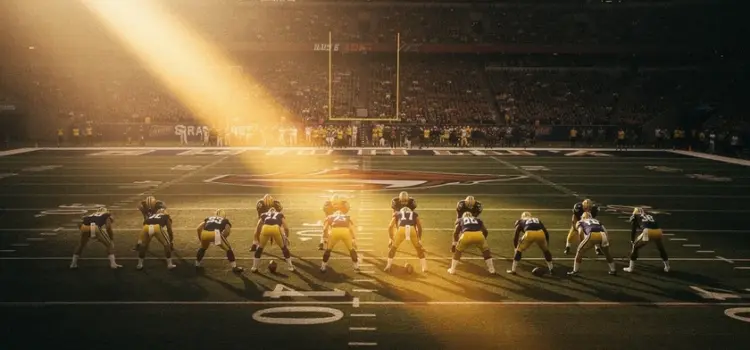
The New York Jets are being urged to trade down from the No. 2 overall pick in the 2026 NFL Draft, with ESPN’s Bill Barnwell proposing a deal that would send that selection to the Tennessee Titans in exchange for the No. 4 pick plus two additional picks in 2026 and 2027. The proposal, published Monday, puts a concrete framework around a debate that has simmered inside Florham Park since the Jets locked up the second slot in the draft order.
Head coach Aaron Glenn’s front office would sacrifice two spots in the first round but walk away with substantially more draft capital — a trade-off that carries real strategic weight given how thin the Jets’ roster remains at multiple positions after years of rebuilding. The numbers suggest the haul could accelerate New York’s rebuild by two full draft cycles if the picks land in premium range.
Why the New York Jets Are Considering a Trade-Down
The Jets’ most likely targets at No. 2 overall are on the defensive side of the ball, but Barnwell’s analysis points out that at least one elite defensive prospect would almost certainly still be available at No. 4. That calculus makes the two-spot slide far less costly than it appears on the surface.
Breaking down the advanced metrics on this class, the separation between the second and fourth defensive prospects in most big boards is marginal — often within the noise of projection error. If the Tennessee Titans and Arizona Cardinals, picking third, both select defensive players, the Jets could still land a top-tier defender at four while pocketing a 2026 pick and a 2027 pick from Tennessee. That is a meaningful upgrade to a draft strategy analysis that has long prioritized accumulating young talent over swinging for a single blue-chip selection.
The counterargument deserves acknowledgment: trading down surrenders control. At No. 2, the Jets can dictate exactly which player walks across the stage in their jersey. Slide to No. 4 and you are at the mercy of what Tennessee and Arizona do above you — a real risk in a draft class where defensive scheme fits at the top of the board are still being debated by personnel departments across the league.
Arvell Reese and the Ohio State Connection
Arvell Reese, the Ohio State hybrid linebacker and pass rusher, emerges as the most frequently cited name for the Jets at both No. 2 and No. 4 in this scenario. Reese’s versatility as a hybrid defender — capable of playing on the edge or dropping into coverage — fits the modern NFL’s demand for chess-piece defenders who can disrupt opposing offensive coordinators before the snap.
Reese’s profile at Ohio State drew comparisons to the kind of 4-3 end/3-4 outside linebacker hybrid that defensive coordinators covet because he can function in multiple personnel groupings without tipping the coverage shell. The film shows a pass rusher who wins with both bend and hand technique rather than relying on a single move — a trait that translates more reliably to the NFL level than pure athleticism. Based on available data from the pre-draft process, Reese projects as a Day 1 starter with the snap count to justify a top-five investment.
The Jets’ defensive scheme under Glenn will demand exactly that kind of versatility. New York finished among the league’s worst units on third down last season, and adding a disruptive edge presence who can also function as a linebacker in nickel packages would directly address that structural weakness without requiring a full schematic overhaul.
Key Developments in the Jets’ Draft Situation
- ESPN’s Bill Barnwell proposed the specific trade framework pairing the No. 2 pick to Tennessee for No. 4 plus picks in 2026 and 2027 — not a vague trade-down, but a named destination with named compensation.
- Barnwell’s analysis identifies Arvell Reese as the Jets’ ideal selection at No. 2 overall, separate from the trade-down scenario, meaning the Ohio State pass rusher is Gang Green’s top target regardless of where New York picks.
- The trade-down scenario’s viability hinges on both Tennessee and Arizona selecting defensive players at picks three and four, leaving Reese or a comparable defender available when the Jets are on the clock.
- Aaron Glenn, in his first full offseason as head coach, would be the decision-maker on any trade-down execution — a significant moment for a first-year head coach navigating a franchise-altering draft slot.
What Does This Mean for the Jets Going Forward?
New York Jets general manager decisions at the top of the 2026 draft will define the Glenn era’s early trajectory. Trading down adds roster depth through accumulated picks, but the franchise’s credibility with its fanbase — battered by years of mismanagement — may demand a bold, decisive selection at No. 2 rather than a prudent slide down the board.
The salary cap implications of selecting at No. 2 versus No. 4 are also worth examining. A No. 2 overall pick carries a larger rookie contract obligation under the NFL’s slotted rookie wage scale, meaning a trade-down to No. 4 would free a modest but real amount of cap space in the first year of that contract. Over a four-year rookie deal, the difference between the second and fourth slot could approach $3-4 million in total contract value — not transformative, but meaningful for a franchise managing multiple roster needs simultaneously.
The Jets’ defensive scheme breakdown under Glenn will ultimately answer whether they need the specific player available at No. 2 or whether positional depth across the roster is the smarter long-term play. Front office brass rarely get a second chance to acquire this kind of leverage, and pulling the trigger on a trade-down requires both conviction in the board and trust that the Titans won’t pivot to a pick the Jets covet. That trust, in April, is never guaranteed.
