
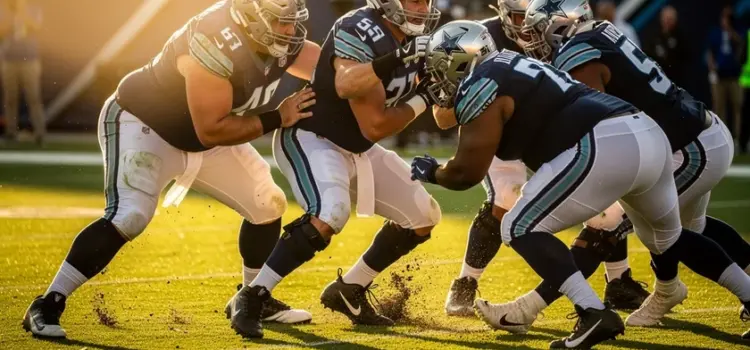
The Detroit Lions are releasing Pro Bowl left tackle Taylor Decker after contract negotiations broke down, NFL Network’s Tom Pelissero reported Friday. Decker, the longest-tenured player on the roster, requested and received his release once talks with the franchise collapsed, ending a 10-season run in Detroit.
The separation closes one of the more durable chapters in Lions offensive line history. Decker anchored the left side of Detroit’s protection unit across a full decade, surviving multiple coaching regimes and roster overhauls. His departure now forces the front office to confront a real gap at one of the most scheme-sensitive positions on the field.
Why Did the Lions Part Ways With Taylor Decker?
Contract talks broke down when the team sought a pay cut from the veteran lineman. Decker declined those terms and formally requested his release, which the franchise granted. The split was mutual in process but driven by a financial disagreement neither side could bridge.
Pelissero’s reporting makes the dynamic explicit: the Lions wanted Decker to accept a reduced salary, and Decker refused. That kind of standoff is common in the NFL when a franchise decides a veteran’s cap number no longer matches his projected contribution. The specific dollar figures involved have not been disclosed publicly.
General manager Brad Holmes has been methodical about managing the roster’s age and cap obligations this offseason. Releasing a player of Decker’s tenure is not a decision made lightly. It reflects the hard arithmetic of NFL roster construction, where longevity carries weight only up to the point where the ledger turns unfavorable. An alternative reading: Decker, having earned Pro Bowl honors, valued his market worth more than Detroit was prepared to pay — a defensible stance for a lineman of his standing.
Decker’s Decade on the Detroit Offensive Line
Read more: Chicago Bears Expected to Let Jaquan
Taylor Decker spent 10 seasons with the franchise, making him its longest-tenured player at the time of his departure. He earned Pro Bowl honors during his career, establishing himself as one of the more dependable left tackles in the NFC. His tenure bridged multiple eras of Lions football, from lean rebuilding years to the team’s recent playoff runs.
The Lions have steadily retooled their roster around younger, cost-controlled talent while competing at the top of the NFC North. Decker’s role as a foundational piece of the offensive line made him valuable. But veteran contracts at premium positions carry escalating cap hits that front offices routinely reassess. Left tackle ranks among the most expensive spots to maintain in the modern NFL, and the club appears to have concluded that his next deal did not fit their projected cap structure.
Left tackle protection directly shapes a quarterback’s ability to work from the pocket, run play-action, and manage time of possession. Detroit’s offense leaned heavily on a clean pocket for Jared Goff. Whoever steps into Decker’s spot must meet a high standard in pass protection, particularly against the edge rushers that populate the NFC North.
Key Facts in the Decker Departure
Pelissero first reported the release, citing the collapse of contract talks between Decker and the organization. Decker formally requested his own release after negotiations failed to produce an agreement — a detail that matters because it signals the player, not just the club, pushed for a clean break.
Decker held the distinction of being the longest-tenured Lion at the time of his exit, a span of exactly 10 seasons. He collected Pro Bowl recognition during that stretch, cementing his status as a high-caliber left tackle across the league. The Lions sought a pay cut before talks collapsed, per Pelissero’s account of the discussions.
What Comes Next at Left Tackle for Detroit?
Read more: Detroit Lions Release LT Taylor Decker
Detroit’s depth chart at left tackle now carries a conspicuous void. The front office must address the opening before the 2026 season begins, whether through free agency, a draft selection, or internal competition. The salary cap implications of cutting Decker — including any dead money obligations — have not been detailed in available reporting.
The free agency market for offensive linemen typically produces a range of options. Veterans seeking one-year contracts and younger players chasing starting roles both populate that pool. Detroit’s draft strategy will also factor in whether the club pursues a left tackle early in the 2026 NFL Draft, where several prospects capable of starting immediately are expected to be available.
For fantasy football managers tracking Detroit’s offensive output, the left tackle spot carries direct implications for Goff’s pocket time and the team’s run game efficiency. A drop in pass protection quality at that position tends to compress the target share for receivers who rely on extended routes. It can also reduce snap counts for running backs in passing situations. The front office’s ability to fill Decker’s spot with a capable replacement will shape the team’s offensive ceiling heading into 2026.
Pelissero’s reporting does not specify a timeline for Detroit’s next move at the position, but the urgency is real. Left tackle is not a spot franchises can patch with a stopgap and expect consistent results against elite edge defenders in the NFC. Detroit’s defensive unit has ranked among the league’s better groups in recent seasons, and the front office understands that protecting the quarterback is the foundation that makes everything else function.
Why are the Detroit Lions releasing Taylor Decker?
The Lions are releasing Decker because contract negotiations broke down between the team and the veteran left tackle. According to Pelissero of NFL Network, the club sought a pay cut, Decker declined, and he then formally requested his release, which the team granted.
How long did Taylor Decker play for the Detroit Lions?
Decker played 10 seasons with the franchise, making him the longest-tenured player on the roster at the time of his release in March 2026, per NFL Network’s Tom Pelissero.
Did Taylor Decker request his release from the Lions?
Yes. Decker requested his release after contract talks failed. Pelissero reported that Decker asked for and received his release once negotiations with the team collapsed.
What position did Taylor Decker play for Detroit?
Decker played left tackle across his 10-season career with the franchise. He earned Pro Bowl recognition during his time in Detroit, establishing himself as one of the team’s most important offensive linemen.
