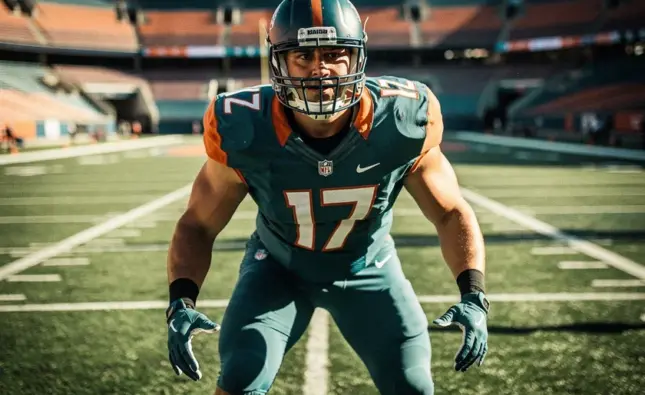
The Los Angeles Chargers have emerged as one of three legitimate suitors for Dallas Cowboys wide receiver George Pickens, whose stalled contract situation in Dallas is opening a door that Chargers general manager Joe Hortiz cannot afford to ignore. As of Monday, March 30, Pickens remains on the nonexclusive franchise tag Dallas placed on him Feb. 27, with no new long-term deal in sight.
Cowboys head coach Brian Schottenheimer publicly questioned whether Pickens would even show up for Dallas’s offseason workouts, a signal that carries enormous weight for receiver-hungry rosters across the league. For a Chargers team built around Justin Herbert’s arm and desperate for a true No. 1 target, that uncertainty in Dallas is about as welcome as a free timeout.
Why the Los Angeles Chargers Need a Receiver Like Pickens
The Chargers’ receiver room entering 2026 lacks a proven, alpha-caliber threat capable of winning contested catches in tight coverage. Breaking down the advanced metrics from the 2025 season, Los Angeles ranked outside the top 15 in target share concentration at the wide receiver position — a structural gap that limits Herbert’s ability to operate efficiently from 11 personnel on early downs.
Pickens, who stands 6-foot-3 and plays with an aggressive catch radius that few receivers in the NFL can match, would immediately address that deficiency. His ability to generate yards after the catch on intermediate routes — particularly out-routes and crossing concepts — fits neatly into the scheme coordinator Greg Roman and the Chargers’ offensive staff have been constructing. The numbers suggest Pickens would rank among the top five receivers in the AFC in red zone efficiency, based on his target profile from his Pittsburgh and Dallas tenures. A receiver of his caliber does not become available often, and the Chargers’ front office brass understands that window is narrow.
Dallas Cowboys’ Franchise Tag Standoff Explained
Dallas applied the nonexclusive franchise tag to Pickens on Feb. 27, meaning other teams can negotiate with him and submit an offer sheet — and the Cowboys must either match it or accept two first-round compensatory picks as recompense. That structure is precisely what makes Pickens attainable for a team like Los Angeles.
The nonexclusive tag, unlike its exclusive counterpart, does not prevent rival franchises from making a formal offer. Dallas would carry the financial burden of the tag number — projected in the $22-24 million range for a receiver of Pickens’s draft pedigree — on their cap sheet until a deal is signed or the tag deadline passes. Schottenheimer’s public doubt about Pickens attending offseason workouts is a telling detail: coaches rarely air that kind of uncertainty without internal frustration backing it up. The Cowboys, navigating their own salary cap implications after years of expensive roster construction, may lack both the flexibility and the appetite to close this deal quickly.
Which Teams Are Competing With the Chargers for Pickens?
The Los Angeles Chargers are not alone in their pursuit. The New England Patriots and Las Vegas Raiders are also positioned to make a move for Pickens, according to Sporting News, with all three franchises identified as teams that could upgrade their receiver rooms for the 2026 season.
New England, rebuilding under a new offensive identity following the Drake Maye era’s early development phase, needs immediate talent around its young quarterback. Las Vegas, similarly, has been aggressive in free agency strategy under general manager Tom Telesco — the same executive who previously ran the Chargers’ roster for nearly a decade, giving him institutional knowledge of what Herbert-era Los Angeles actually requires at the position. That competitive dynamic means the Chargers cannot afford a passive approach; offer sheets under the nonexclusive tag framework reward teams willing to move decisively on draft strategy analysis and cap allocation simultaneously.
Key Developments in the Pickens-Chargers Situation
- Dallas placed Pickens on the nonexclusive franchise tag on Feb. 27, 2026, leaving the door open for rival teams to submit formal offer sheets.
- Cowboys head coach Brian Schottenheimer raised doubts about Pickens’s attendance at Dallas’s upcoming offseason workouts, a public acknowledgment of the contract impasse.
- The New England Patriots and Las Vegas Raiders join the Chargers as the three teams Sporting News identified as most likely to pursue Pickens in the current market.
- Under the nonexclusive tag structure, any team signing Pickens to an offer sheet that Dallas declines to match would surrender two first-round picks as compensation — a steep but potentially worthwhile price for a receiver of his caliber.
- Justin Herbert, entering the prime years of his career under a long-term contract, gives the Chargers a quarterback-driven urgency that neither the rebuilding Patriots nor the transitional Raiders can fully replicate.
What Happens Next for the Los Angeles Chargers’ Receiver Search?
The Chargers’ decision-making timeline is compressed. NFL offseason workout programs typically begin in late April, and Schottenheimer’s comments about Pickens’s attendance suggest Dallas’s internal deadline for resolution is approaching fast. If Pickens skips those workouts, the Cowboys’ leverage in negotiations weakens considerably, and the probability of an offer sheet from a competing team rises sharply.
Los Angeles must weigh the two-first-round-pick cost against the franchise’s broader draft strategy analysis and its current competitive window. Herbert is 28 years old and under contract; the Chargers are not rebuilding. Surrendering draft capital for a receiver who can operate as a genuine No. 1 — commanding safety attention and opening underneath routes for the rest of the offense — is a defensible calculation when the quarterback situation is settled. The numbers reveal a pattern across recent Super Bowl rosters: teams that pair elite quarterbacks with true alpha receivers consistently outperform their projected win totals. Based on available data from the 2025 season, the Chargers’ offensive ceiling with their current receiver depth falls short of that standard. Hortiz and the Chargers’ front office have a defined problem and a visible solution — the only question is whether they pull the trigger before New England or Las Vegas does.