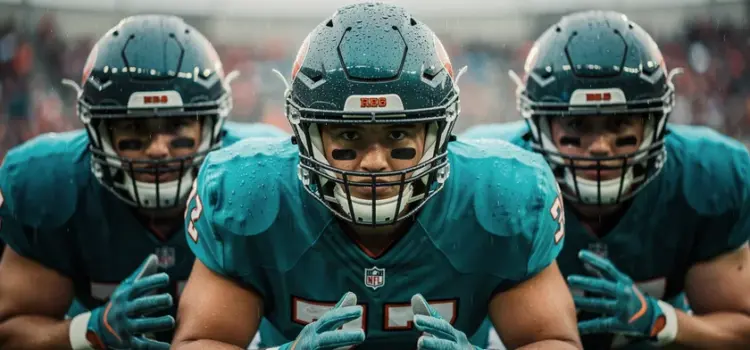
New York Jets head coach Aaron Glenn declared Geno Smith the unquestioned starting quarterback for the 2026 season, telling NFL Senior National Columnist Judy Battista at the Annual League Meeting in Phoenix on Sunday that he has “no doubt” about his signal-caller. The declaration arrived with notable conviction, despite Glenn finishing his debut campaign with a 3-14 record — one of the worst single-season marks in recent Jets history.
Glenn’s endorsement was unambiguous. “He’s our guy,” the first-year head coach said of Smith, framing the decision not as a default but as a deliberate organizational commitment. General manager Darren Mougey stands alongside Glenn in that assessment, suggesting the Jets front office brass entered the league meetings with a unified message rather than a hedged one.
New York Jets’ 3-14 Season Sets the Stakes
The New York Jets finished the 2025 season at 3-14, Glenn’s first year leading the franchise after a lengthy career as a defensive coordinator and assistant. That record placed the Jets among the NFL’s most troubled rosters, yet Glenn and Mougey publicly project confidence in a rapid rebuild rather than a prolonged retool.
Breaking down the advanced metrics from that 3-14 campaign reveals a pattern familiar to observers of struggling AFC East clubs: inconsistent quarterback play, a porous offensive line, and a defense that showed flashes without the personnel depth to sustain pressure. Smith, a veteran who revived his career in Seattle before joining New York, enters 2026 as the designated architect of whatever offensive identity Glenn and his staff intend to install. The numbers suggest his passer rating and play-action efficiency in Seattle — where he averaged over 4,000 passing yards in consecutive seasons — give the Jets a credible baseline, even if replicating that production behind a rebuilt line is far from guaranteed.
One counterargument worth considering: a 3-14 team that commits to its incumbent starter without an open competition risks compounding the same roster deficiencies that produced those losses. Glenn’s confidence may be genuine, but the salary cap implications of any mid-season quarterback change would be severe enough that the Jets had little practical choice but to rally around Smith publicly, whatever private contingency plans exist.
What Did Aaron Glenn Actually Say About Geno Smith?
Aaron Glenn stated without qualification that Geno Smith is the New York Jets‘ starting quarterback, using the phrase “He’s our guy” in direct conversation with NFL.com’s Judy Battista at the Annual League Meeting in Phoenix. Glenn did not attach conditions, competition clauses, or performance benchmarks to the declaration — a deliberate signal to the locker room and the rest of the AFC East.
That kind of public commitment carries real weight in the NFL’s offseason ecosystem. When a head coach hedges on his quarterback at the league meetings — as Atlanta’s Kevin Stefanski did by framing Tua Tagovailoa and Michael Penix Jr. as competitors — it opens the door to distraction, agent leverage, and trade speculation. Glenn chose the opposite posture. Whether that reflects genuine film-room conviction or calculated roster management, the effect is the same: the Jets enter the 2026 draft strategy cycle with Smith locked in, which shapes every offensive personnel decision from receiver target share to tight end snap count.
Key Developments From the Jets’ League Meeting Stance
- Glenn made the Geno Smith declaration specifically during a one-on-one interview with NFL Senior National Columnist Judy Battista at the Annual League Meeting in Phoenix, not in a formal press conference.
- General manager Darren Mougey is aligned with Glenn’s quarterback decision, indicating the commitment runs through the full front office rather than residing solely with the coaching staff.
- Glenn and Mougey expressed confidence in a quick turnaround despite the 3-14 finish, framing 2026 as a competitive year rather than a developmental one.
- The league meeting setting placed Glenn alongside other head coaches navigating quarterback uncertainty, including Atlanta’s Stefanski, who openly discussed a Tagovailoa-Penix competition, and Kansas City’s Andy Reid, who declined to commit to a Week 1 timeline for Patrick Mahomes following a down year for the Chiefs.
- Glenn’s declaration arrived without any reported condition tied to an offseason competition, a structure that differs from how several other rebuilding franchises have handled their quarterback depth chart decisions this cycle.
How Does This Shape the New York Jets’ 2026 Offseason?
With the quarterback position settled — at least publicly — the New York Jets can direct their offseason energy toward the surrounding infrastructure. Offensive line depth, receiver target share distribution, and red zone efficiency were all liabilities in 2025, and the draft strategy analysis heading into the 2026 NFL Draft will almost certainly prioritize blocking and skill-position talent over a quarterback prospect.
The Jets hold a premium draft slot after finishing 3-14, giving Mougey significant capital to address those gaps. A settled starter also clarifies free agency targeting: teams that know their quarterback can negotiate contracts for receivers and tight ends with specific route-running and yards-after-catch profiles in mind, rather than hedging across multiple offensive systems. Glenn’s defensive scheme background — he built his reputation as a cornerback coach and defensive coordinator — means the offensive rebuild will lean heavily on coordinator hires and scheme fits around Smith’s established strengths, particularly his ability to operate from the pocket and extend plays under pressure.
The film shows Smith performing best in West Coast and spread-action concepts where his processing speed compensates for diminished athleticism. If Glenn’s offensive staff designs around those tendencies rather than forcing Smith into a vertical attack he has never consistently executed, the Jets’ turnaround projection is at least structurally sound — even if the roster construction work ahead is substantial.