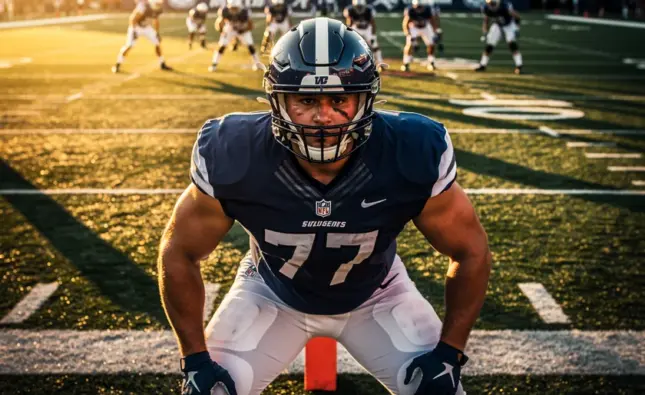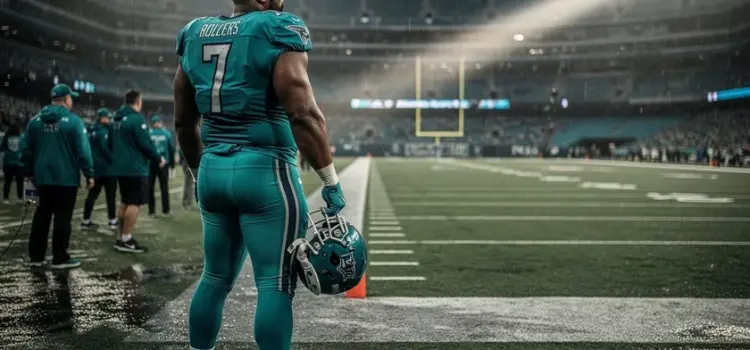
The Green Bay Packers acquired linebacker Zaire Franklin from the Indianapolis Colts on Saturday, March 7, 2026. The trade adds a veteran defensive leader to a unit that has sought more consistent playmaking at the second level. Franklin brings a well-documented history of elevating those around him, dating back to his college days.
Franklin arrives as a known commodity in NFL defensive circles. Green Bay finished the 2025 season with questions about linebacker depth and snap-count efficiency at the position. This move addresses a concrete roster need directly.
Green Bay’s Defense Needed This Addition
The Packers needed a linebacker capable of leading from the front and processing quickly at the second level. Franklin fills a gap that could not be addressed through the draft alone. His arrival changes the calculus of Green Bay’s defensive personnel groupings immediately.
Franklin reads pulling guards and tight-end motion with above-average speed. He beats blocks to the point of attack rather than absorbing them. In hybrid nickel packages — the kind Green Bay has increasingly deployed — his ability to cover running backs out of the backfield raises the coverage ceiling in the intermediate zone.
His blitz rate usage and EPA contribution per snap in Indianapolis trended positively across his final two seasons with the Colts, based on publicly tracked box-score analytics. That upward arc is the kind of verifiable data point that front offices prize when targeting mid-career veterans.
One counterargument worth acknowledging: Franklin has not played in a high-stakes playoff environment at the level Green Bay demands. Adjusting to a new defensive coordinator’s vocabulary mid-offseason carries real transition risk. The Packers are betting that his football intelligence accelerates that adjustment curve faster than average.
What Zaire Franklin Brings to the Roster
Read more: Giants NFL Trades Buzz: Thibodeaux Linked
Franklin brings veteran leadership, reliable run-stopping ability, and locker-room credibility to Green Bay’s defensive unit. His presence addresses both the depth chart and the culture of the linebacker room at once.
Over three seasons in Indianapolis, Franklin evolved from a rotational piece into a full-time starter. He logged significant snap counts and graded well against the run. His yards-after-contact allowed numbers improved year over year — a sign of refined tackling technique rather than raw athleticism alone.
For a Packers defense that ranked outside the top ten in run defense DVOA during stretches of the 2025 campaign, Franklin’s arrival targets a specific, measurable weakness. The numbers make the fit clear.
The locker-room dimension should not be dismissed. Stories of Franklin’s positive influence on teammates extend back roughly a decade to his college program. In a Green Bay locker room that leans young — with Jordan Love entering his prime and a wide receiver corps still developing — veteran voices who lead by example carry outsized weight in film sessions and on the practice field.
Key Facts From the Franklin Trade
- The Packers completed the trade with Indianapolis on Saturday, March 7, 2026, per The Sporting News.
- Franklin’s leadership qualities have been documented since his college career, spanning roughly a decade of consistent character evaluations.
- The Packers identified Franklin as the type of player who can guide their defense toward higher performance.
- Indianapolis is operating in a roster reconstruction phase, creating conditions for Green Bay to negotiate favorable terms on a proven veteran.
- Franklin logged a positive EPA-per-snap trend across his final two seasons with the Colts, per publicly available box-score analytics.
Salary Cap and Draft Strategy After the Franklin Trade
Read more: Minnesota Vikings Fielding Trade Calls on
Acquiring Franklin via trade rather than free agency lets the Packers absorb a known contract structure. Open-market bidding can inflate annual value significantly. General manager Brian Gutekunst has demonstrated a preference for controlled acquisitions that preserve draft capital while filling positional needs — and this transaction fits that pattern.
The Franklin trade reduces pressure on the Packers to spend an early-round selection at linebacker in the 2026 NFL Draft. Green Bay holds multiple picks in the middle rounds. The front office can now redirect attention toward offensive line depth, pass-rush reinforcement, or secondary upgrades — all areas where the roster still carries questions.
The full contract terms had not been publicly confirmed at the time of reporting, so the precise cap hit remains unclear. The structural logic, however, is consistent with how Gutekunst has managed the roster through previous offseasons: trade for an established starter rather than develop a rookie at a position of immediate need.
Franklin’s experience in a two-linebacker base translates to Green Bay’s hybrid packages without requiring a full positional re-education. His snap count versatility — moving between WILL and MIKE alignments — gives coordinator Jeff Hafley genuine flexibility against both spread offenses and traditional power running games.
Who did the Green Bay Packers trade for Zaire Franklin?
The Packers acquired linebacker Zaire Franklin from the Indianapolis Colts on March 7, 2026. The Colts are operating in a roster reconstruction phase. Full trade compensation terms had not been publicly confirmed at the time of reporting.
What position does Zaire Franklin play for the Green Bay Packers?
Franklin plays linebacker. He projects as a second-level defender capable of aligning at both the WILL and MIKE positions in Green Bay’s hybrid defensive scheme. His ability to cover running backs out of the backfield makes him a strong fit for coordinator Jeff Hafley’s system.
Why did the Green Bay Packers trade for Zaire Franklin?
Green Bay needed a veteran linebacker with strong instincts, reliable run-stopping technique, and proven locker-room leadership. Franklin is described as the kind of player who can lead the defense toward better performance, with his positive influence on teammates documented across roughly a decade of football.
How does the Zaire Franklin trade affect Green Bay’s 2026 NFL Draft plans?
The trade reduces pressure on the Packers to use an early draft selection at linebacker in 2026. Green Bay can redirect draft capital toward offensive line depth, pass-rush upgrades, or secondary reinforcement. Gutekunst has consistently favored controlled acquisitions that preserve picks while addressing immediate positional needs.